
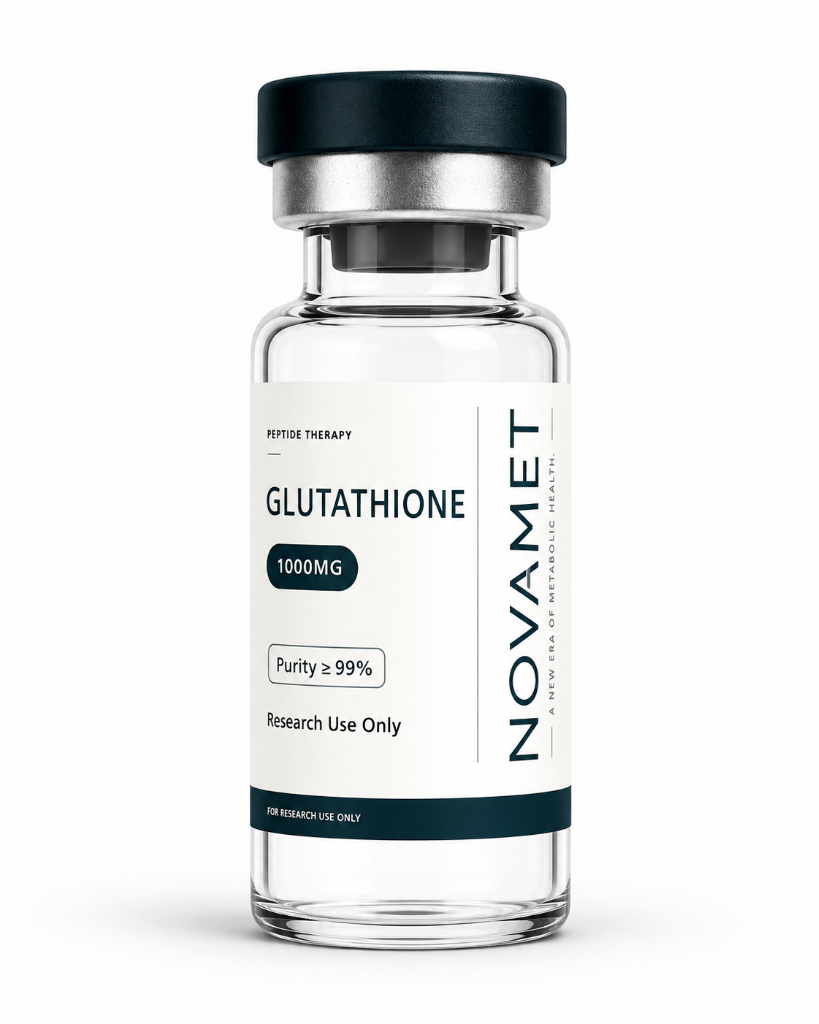
Glutathione Synthesis
Master endogenous tripeptide antioxidant investigated for cellular detox signaling, ROS neutralization, and skin clarity support.
infoResearch & Clinical Context
Investigated in hepatic cellular protection, ROS clearance, and dermal luminosity pathways.
Mechanism & Biological Overview
Glutathione is the body's master endogenous antioxidant—a tripeptide composed of Glutamate, Cysteine, and Glycine. It plays a critical role in neutralizing reactive oxygen species (ROS), conjugating xenobiotics in the liver, and modulating melanogenesis pathways to encourage cellular radiance.
Key Biological Highlights & Benefits
- checkMaster antioxidant neutralizing intracellular reactive oxygen species
- checkSupports Phase II hepatic xenobiotic detox pathways
- checkInhibits tyrosinase activity to support even skin complexion
- checkProtects cellular lipids and proteins from oxidative stress
Scientific Literature Abstract
"Glutathione acts as a primary nucleophilic scavenger of reactive oxygen and nitrogen species. By maintaining the reduced glutathione (GSH) to oxidized (GSSG) ratio, it protects mitochondrial membrane integrity and downregulates melanin synthesis via direct tyrosinase inhibition."
hubTarget Receptor Pathways
Frequently Asked Questions
How does Glutathione support cellular detoxification?
Glutathione binds to toxins and heavy metals in Phase II liver detox pathways, converting fat-soluble waste into water-soluble compounds easily excreted by the body.
What is its role in dermal tone and clarity?
Glutathione inhibits tyrosinase activity, shifting melanin production from darker eumelanin to lighter pheomelanin pigments for clear, radiant skin.
Explore Related Scientific Interventions
Semaglutide Protocol
A GLP-1 receptor agonist studied for appetite modulation and glycemic signaling pathways in metabolic health.
Tirzepatide Dual Agonist
Dual GIP and GLP-1 receptor agonist targeting complementary metabolic pathways for body composition and appetite research.
Retatrutide Triple Agonist
Triple receptor agonist (GIP, GLP-1, and Glucagon) studied for its potential effects on metabolic rate and lipid mobilization pathways.
Clinical & Legal Disclaimer
Medical Disclaimer: Information provided on this website is for educational and informational purposes only and is not a substitute for professional medical advice, diagnosis, or treatment. Product availability, indications, regulatory status, and suitability may vary. Any medical treatment should be considered with an appropriately qualified healthcare professional.
NOVAMET does not guarantee specific weight-loss, metabolic, or treatment outcomes.